Your first home in Craze City
Buying a house is one of the most-searched things anyone wants from a life sim. It is also the feature most likely to be a certificate you look at once.
· 3 min read · Brainbaby Labs · Updated
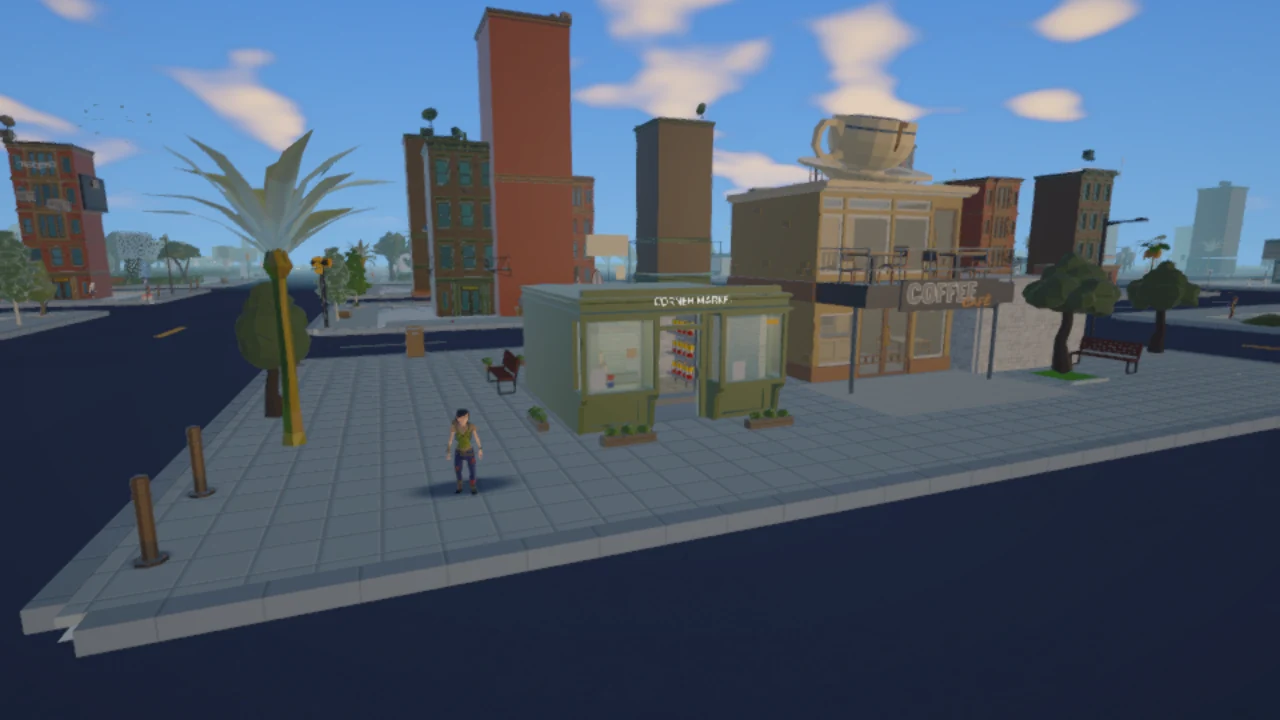
The trophy problem
In most games with housing, a house is the thing you get for having played. You save, you buy, you walk in, you place some furniture, and then the house has finished happening to you. It is a receipt.
That is not a bug in those games. Housing is usually bolted to the end of a progression curve on purpose, as a place to spend money once there is nothing left to buy. But it is the reason the feature so often reads as thinner than the price tag suggested, and it is why the honest question is not whether a game lets you buy a house. It is what the house does on the second day.
Three things a house has to do, and it needs all of them
Property stays interesting when it is wired into the systems that were already running, rather than parked at the end of them.
- It has to be collateral
- A deed you can borrow against turns a house from a place you sleep into a position you hold. Now owning it changes what you can attempt.
- It has to have a price that moves
- A fixed value is a number in a menu. A value that responds to the city means buying involves a judgement, and judgement is the thing players actually enjoy.
- It has to be sellable
- If you cannot get out, you never really made a decision. Rent, buy, furnish and flip is a loop; buy and keep forever is a purchase.
Collateral is the one that does the most work
Of those three, borrowing against property is what changes the shape of a session most, and it is the one the Craze Bank is built around. Money in the bank earns interest while you are away, and a loan is secured against something you actually own.
The reason that matters is that it gives owning a downside. Without it, a house is a store of value with no risk attached and the only question is whether you can afford it. With it, the question becomes whether you should — because the deed you borrowed against is a deed you can be in trouble over, and a plan that needed one good week can turn into a plan that needs two.
That is a real decision, and it is available on the second day and the two hundredth, which is the test the trophy version fails.
Property and purchases need clear boundaries
Craze City is planned as a free download with optional gem purchases. The gem shop includes premium cars priced in gems. The older promise that nothing in the game could be bought with real money no longer describes the plan.
Property needs its own clear rules: what a player earns, what a purchase changes and what remains at risk when borrowing. The bank and property economy use in-game currency, with no cash-out or real-money lending. A virtual loan does not create a debt outside the game.
Optional purchases mean Craze City falls outside the category in our guide to mobile games with no in-app purchases. They also mean we should explain actual purchase effects rather than promise that every asset is earned in the same way. The game is still in development.
What we still have to get right
Being honest about the open problem: an economy where property appreciates rewards whoever bought earliest, and in a shared city that advantage compounds. Someone starting a year after launch should be arriving in a city with opportunities in it, not a city that has already been divided up.
There is no clever answer to that yet, and anyone claiming one before their game has a population is guessing. Optional gem purchases are part of the plan, so their effects on progression need to be explained and tested alongside the economy.
Craze City is an online open-world life sim for mobile and it has not launched. Everything here is how the property system is being built, not a walkthrough of one you can go and use. The waitlist is how you hear when it opens.