A closer look at Deadwood’s content and tone
A content rating tells you what a game shows. It does not tell you what it does to a kid's money, their evening, or the ten minutes after they lose. Those are the harder three.
· 5 min read · Brainbaby Labs · Updated
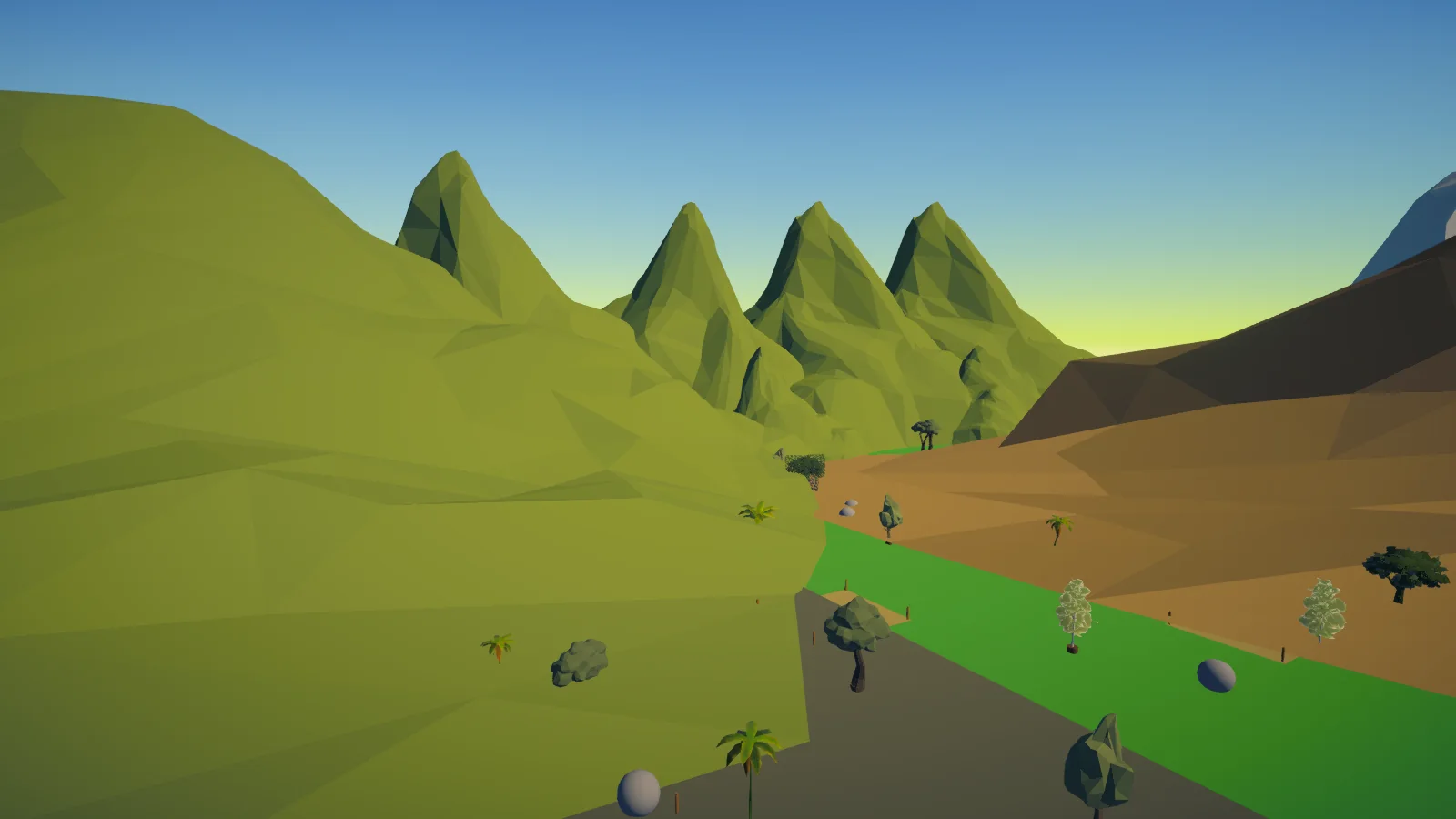
The rating is the easy half
Nobody making a zombie game is making it for six-year-olds, and pretending otherwise would be the first dishonest sentence on this page. The question underneath "zombie game for kids" is narrower and much more practical: can this be handed over to a twelve-year-old without being previewed first.
A content rating answers one quarter of that. It covers what the game shows, and in Deadwood Quarantine the answer is nothing — the infected are contained rather than killed, so there is no blood, no corpse and no gore anywhere in the mode. That decision is settled and it was cheap to make, because it is a thing you choose once and then do not build.
The other three quarters are what the game does once it has a kid's attention, and they are where a family friendly game usually comes apart.
- Content
- What is on screen. The only part a store rating covers, and the easiest of the four to get right.
- Money
- Whether the game can take any. Craze City has no in-app purchases at all and a closed in-game economy with no cash-out.
- Loss
- What a bad run actually costs. In Deadwood it is the hazard pay you had not banked yet, and nothing else.
- People
- Who else is in the world. It is an online city, so this one is a moderation question rather than an art question — and it is the open one.
Problem one: what it does to money
The most common way a game aimed at teenagers goes wrong has nothing to do with what is on screen. It is the shop.
Craze City has no in-app purchases of any kind. No loot boxes, no gem shop, no currency packs, no real-money price tag anywhere in the game. The economy is closed: currency is earned by playing, it does not come in from a card and it does not go out to one. Every cosmetic and every vehicle is earned the same way.
That is a short sentence and an expensive decision, because it removes the escape hatch. A game with a currency pack is allowed to leave the earn rate slightly too slow, and then sell the difference. With nothing to sell, every number in the economy has to work on its own merits — hazard pay in the quarantine, bounties on the infected, the pay across nine careers, the interest the Craze Bank hands out on savings — because the only route to money is to go and earn it. If earning it is not enjoyable, there is no second revenue line quietly propping the game up.
The trade is real and it is ours, not the player's. We give up the model that funds most free mobile games. What a parent gets in return is that the answer to "can they spend money in this" is no, with nothing to configure, nothing to lock and nothing to supervise.
Problem two: what losing costs
Deadwood Quarantine can take money off you. That is the entire point of it. Hazard pay accrues by the minute and multiplies the deeper you push past the wall, and none of it is yours until you walk back across the bridge. Go down inside the wire and every unbanked coin stays there.
That sounds like the opposite of a mode you would hand to a twelve-year-old, and the reason it is not is everything the loss does not touch. Money already banked is safe. So is the house, the garage and the reputation on the account. The only thing at risk is the packet the player chose to carry, on a trip they chose to extend, past an exit that was open the whole time — the infected leash to the island and cannot follow anyone onto the bridge, so retreat is available at every second of every run.
A loss shaped like that is survivable at twelve because the player set its size themselves. Walking back with less than they hoped for is a decision that went badly, which is a thing a child can be annoyed about for ten minutes and then go again. It is a different experience from a punishment that arrives from outside and cannot be argued with.
Problem three: the game has to be willing to stop
The third thing a rating cannot see is whether a game will ever let go.
Deadwood has a stopping point built into its rules rather than into a menu. Hazard pay banks when you cross the bridge, so every run ends on the same beat: standing at the checkpoint with a number that is now permanently safe. That is a natural place to put a phone down, and it arrives whenever the player decides to end a run rather than whenever a meter says so.
Compare it to the shape most free mobile games are cut to, where the session has no edge at all. The meter is always partly full, the timer is always partly run down, and there is never a moment where the game says you are finished. A game with no stopping point does not remove the argument about screen time; it outsources it to the household.
The raid clock does the same job at a smaller scale. Near the wall a raid comes roughly every 147 seconds and lasts about 32. Deep in the zone it is every 116 and lasts 58. Either way the mode is made of short complete units with an obvious seam between them, and a seam is what you need when someone has to be told to stop in ten minutes.
Problem four: the other people
The last one has never been covered by a content rating for any game, and filing it as solved here would be dishonest. Craze City is an online open world. You and your friends are in the same city at the same time, and so is everybody else.
That is the product rather than a mode we could switch off — the shared city is the reason the game exists at all. It also means the question a parent is genuinely asking, which is who can reach my kid, gets answered by what we build around the world rather than by what we put inside it. It deserves its own page written against real features, not a reassuring paragraph at the end of this one.
What is settled is the world itself. It is a city of jobs, rent, driving and one very bad island, built to a 12+ content standard throughout. The final store rating will be whatever Apple's and Google's questionnaires return.
None of this started as a kids' game
It started as a city life sim about work, rent, a car and eventually a flat. Deadwood Quarantine is the one district in that city actively trying to kill you, and a gore system would have been the single element in the whole game aimed at a different audience from everything else. So it was never built. Not disabled, never built.
The rest came from the same place rather than from a compliance checklist. A game about earning money is a worse game if money can be bought. A mode about deciding when to walk away is a worse mode if it never lets you leave. Most of what reads here as a set of concessions to parents is just the design being consistent with itself.