The Craze City field guide / 03
Arcade driving games on mobile: feel over realism
Arcade driving usually prioritises responsive, readable movement over detailed vehicle simulation. Choose it if you want to learn a turn quickly and get back into the action after a mistake. Still check actual touch controls: the arcade label does not guarantee that steering or the camera feels good on your phone.
A player’s guide from the studio building Craze City. The full mobile game is prelaunch; the café browser challenge is playable now.
Predictability is more useful than a physics label
You should be able to connect an input with a result. Hold a turn, release it and watch how the vehicle settles. If the response is understandable, you can learn even exaggerated handling. If small inputs create surprising spins, the game may feel difficult for reasons unrelated to your driving decisions.
A simulator can also be predictable, but it may ask you to learn more about braking, grip and weight. Arcade handling often compresses that learning into a faster feedback loop. Decide how much time you want to spend understanding the vehicle before enjoying an ordinary trip through the city.
Recovery shapes the whole session
Crashes are useful to watch when comparing driving games. Does a collision stop the car, spin it, reset it or end the event? How quickly can you face the right way again? The recovery process may affect a short session more than the top speed advertised in a trailer.
Forgiving recovery does not remove all challenge. It can let you take another attempt at a corner without a long interruption. If you prefer consequences such as repairs or lasting damage, check that those systems exist. A dramatic dent effect might be cosmetic rather than a mechanical cost.
Touch controls need room to breathe
Steering, braking and acceleration can compete for screen space with navigation and interaction buttons. Watch a real mobile clip to see whether the important targets are distinct and reachable. A crowded interface can make an accessible handling model feel harder than it needs to be.
Sound and vibration can help communicate speed, but you should also be able to judge movement visually. If you often play without audio, inspect whether braking and sliding remain readable. When a game offers settings, try adjusting sensitivity before deciding the entire handling model is wrong for you. Small control changes can alter the experience substantially.
Arcade driving in a city life sim
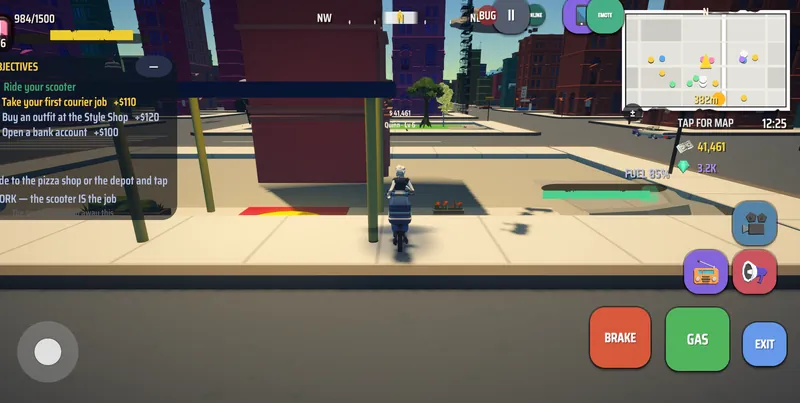
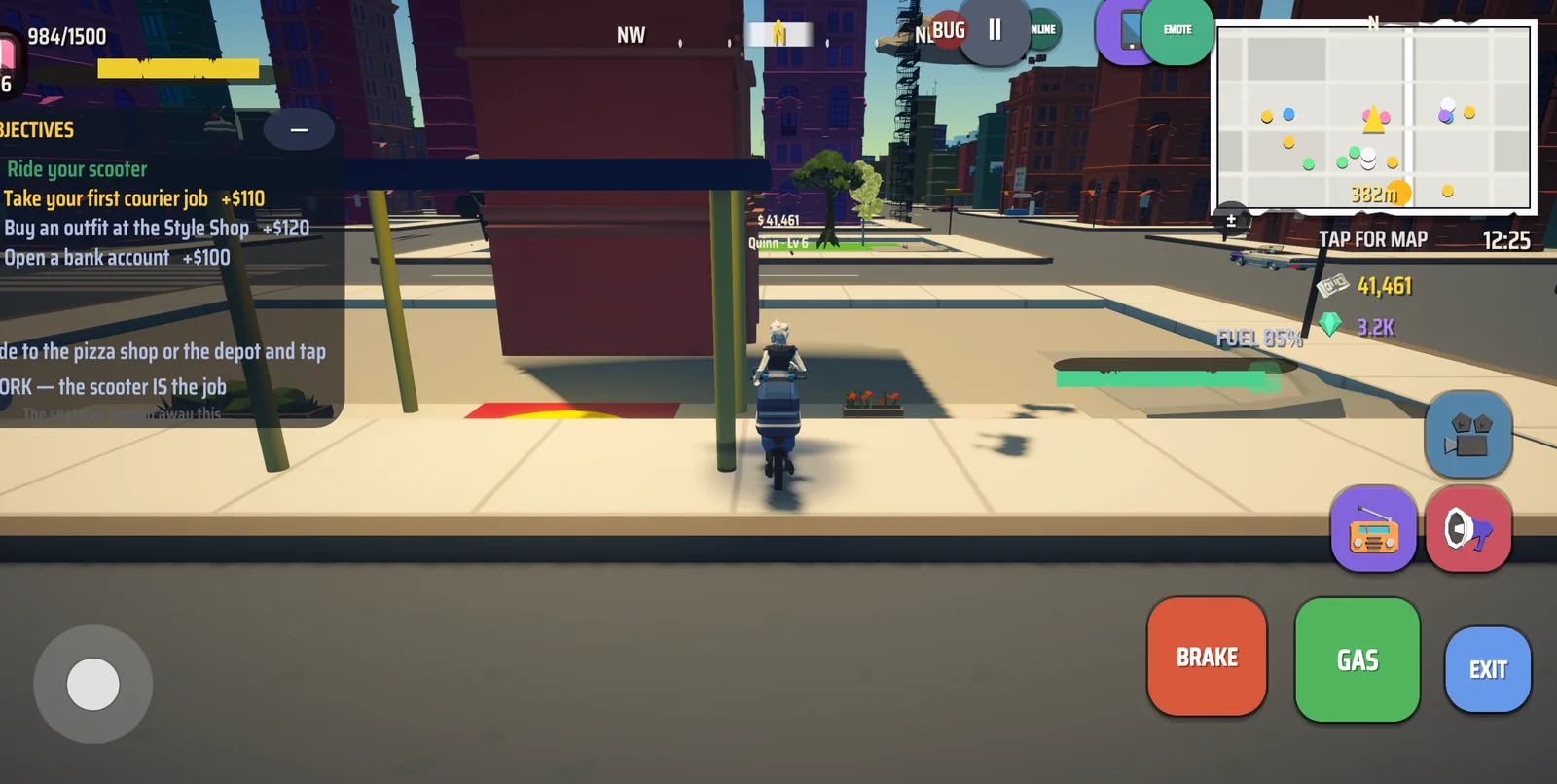
Craze City's development writing describes arcade driving as part of a broader city, rather than presenting the game as a dedicated driving simulator. Its actual scooter capture shows the mobile road interface. The career notes discuss how driving can sit alongside paid work and other activities.
For a player, the useful distinction is between enjoying the trip itself and treating driving as transport to another activity. Both can fit the same game. Read free-roam city driving if choosing your own route matters, and street-racing games if you want that handling tested against an event goal.
Make it your kind of game
Your shortlist checklist
Tick the things you want to check before choosing. This is a scratchpad for this visit.
Inside our city / in development
Where Craze City fits
Craze City’s current direction includes arcade-style driving within a city life sim. The game is prelaunch. The actual scooter image gives context, while final handling, control settings and performance need to be judged in a released build.
See actual game capturesQuick questions
Does arcade driving mean the game is easy?
No. It describes the style of handling, not the difficulty of every event. A forgiving vehicle can still be used in demanding races or timed routes.
Should I choose arcade driving or a simulator?
Choose by the learning you enjoy. Arcade games often give quick, exaggerated feedback, while simulations may ask for more attention to vehicle behaviour. Try actual controls when possible.