The Craze City field guide / 02
Career progression in life sims: choosing a job loop
A satisfying life-sim career gives you a routine you enjoy and a clear reason to improve at it. Check what a promotion changes: pay, tasks, access or responsibility. A growing level number can support progression, but it cannot tell you whether the work itself becomes more interesting.

A player’s guide from the studio building Craze City. The full mobile game is prelaunch; the café browser challenge is playable now.
Look beyond the first promotion
The first job is often simple so you can learn the controls. To judge longer-term progression, look for what happens later. Do you handle different orders, travel to new places or make more decisions? Or does the same action pay a larger amount? Either can work, but they reward different interests.
If you enjoy familiarity, a reliable routine with better pay may be enough. If you want to master a profession, look for changing tasks and a clear skill curve. A list of many job titles does not prove depth in any one of them. Watch a specific job at more than one stage if footage is available.
Switching jobs should be an informed choice
Some life sims encourage one long career, while others let you change roles often. Find out whether experience stays with each job and whether a switch costs resources. That determines whether experimentation feels inviting or risky. You may not know your favourite activity until you have tried several.
Consider the time needed to begin a shift as well. Travelling to a workplace can help a city feel connected, but a long setup before every short task can become tiring. A useful job loop gives you a clear start, a comprehensible task and an obvious finish. Those boundaries make it easier to fit work around exploration.
Wages matter because of what they buy
A career reward has meaning when it helps you reach a goal you chose. That could be a vehicle, a home or a cosmetic item. Check whether ordinary work remains a viable way to progress, and whether riskier activities are optional. A job advertised as peaceful loses that appeal if essential progress eventually requires combat.
Compare costs with the tasks you enjoy rather than only looking for the fastest income method. A slightly slower role can be better for you if you like repeating it. Guides that promise the best wage before a game launches are especially fragile, because balance can change. Development explanations are more useful than invented final earning rates.
How Craze City approaches the ordinary shift
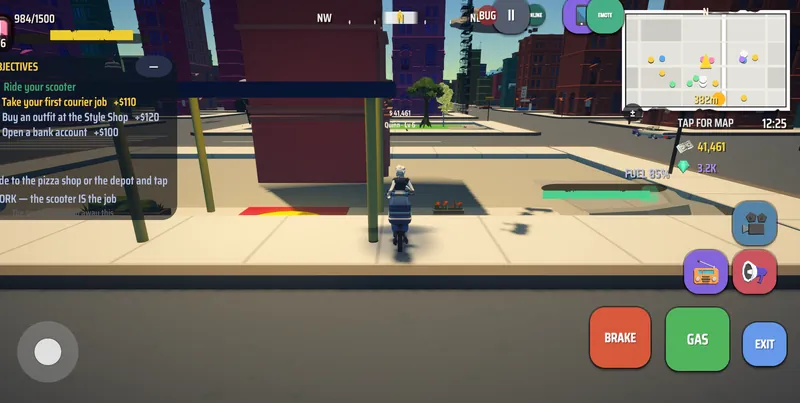
The current build includes several careers, from service work to driving and farming. Its career design notes explain why predictable wages underpin the wider city economy. The economy article discusses what happens to money after you earn it.
Those are development accounts, not a released progression guide. This page deliberately avoids telling you which career is optimal or how many shifts buy a house. A useful prelaunch decision is whether the overall work-and-explore rhythm appeals to you. Exact progression comparisons should wait for a build players can evaluate under the same rules.
Make it your kind of game
Your shortlist checklist
Tick the things you want to check before choosing. This is a scratchpad for this visit.
Inside our city / in development
Where Craze City fits
Craze City has career progression in its current development build. Paid work is part of a larger city routine rather than a separate menu-only life simulator. The game is prelaunch, so final wage rates, progression speed and launch balancing are not settled by this guide.
See actual game capturesQuick questions
Does having many careers mean each job is detailed?
No. The number of careers describes variety, not depth. Look at a complete shift and what changes later in that particular role.
Should I choose the highest-paying job in a life sim?
Only if you enjoy that routine and the reward fits your goal. A slightly slower job you like can be a better use of leisure time than repeatedly doing an activity you dislike.